
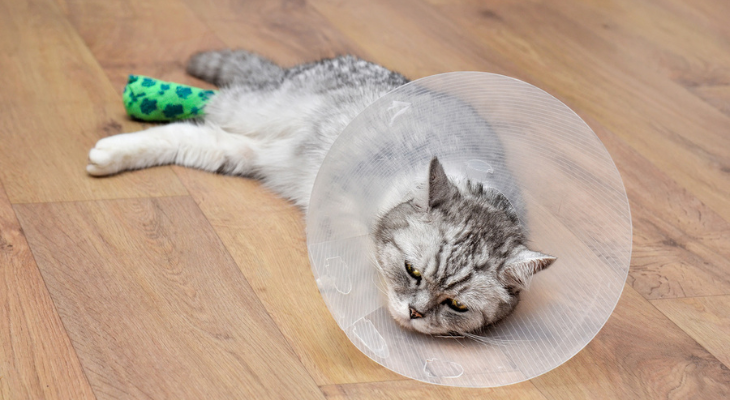
How Your Veterinarian Can Help with Lameness
Delaying a visit to the veterinarian is never a good idea if your pet is limping. Prompt medical care may prevent the condition from worsening and relieve your furry friend's pain.
The First Step in Treating Lameness
Before your veterinarian can offer any treatment, he or she needs to determine why your pet is lame. Your dog, cat, or small animal will receive a thorough examination that may include X-rays, bloodwork, or other lab tests. You can help the veterinarian make a diagnosis by providing information about:
- Timing. When did you first notice the lameness? Did the symptoms begin suddenly or gradually?
- Symptoms. What are your pet's signs and symptoms? For example, does your pet limp, fall over, avoid putting weight on one leg, avoid jumping, sit differently, hop when running, or constantly lick a paw or leg? Be sure to mention any other signs and symptoms you may have noticed, even if they don't seem to be related.
- Behavioral Changes. Have you noticed any changes in your pet's mood or behavior?
- Injuries. Did your pet recently fall? Have you noticed any cuts on your pet's body?
Treating Lameness
Lameness has many possible causes, and treatment varies for each one. Common lameness causes include:
- Paw Injuries. Your pet may be limping due to a cut or burn on a paw, a foreign object stuck in the paw, or another kind of paw injury. Treatment may involve removing a foreign object, applying antibiotic ointment, and bandaging the paw.
- Osteoarthritis. An achy joint may be the reason for your pet's lameness. Arthritis in pets can be treated with non-steroidal anti-inflammatory pain medication, glucosamine and chondroitin supplements, prescription arthritis food, weight management, massage, physical therapy, or surgery if symptoms are severe.
- Poisoning. Lameness can be a sign that your pet may have eaten something toxic. Other signs of poisoning may include difficult breathing, vomiting, diarrhea, and seizures. Poisoning requires emergency medical treatment to save your pet's life.
- Hip Dysplasia. Hip dysplasia occurs when the end of the femur doesn't fit in the hip joint properly. Hip dysplasia is often inherited and is more common in Labrador Retrievers, Golden Retrievers, and German Shepherds, according to PetMD. Cornell Feline Health Center notes that hip dysplasia is rare in cats, although certain breeds, like Maine Coon cats, may be more likely to develop the condition. Strategies for managing the symptoms of hip dysplasia include maintaining a healthy weight, undergoing physical therapy, or taking joint supplements and anti-inflammatory medication. Surgery may be needed if the condition is extremely painful or affects your pet's mobility.
- Fractures. Your pet's symptoms could be caused by a broken bone. A fracture could have happened if your pet fell, was hit by a car, or by another type of physical trauma. Depending on the severity of the fracture, treatment could involve a splint or cast or surgery to stabilize the bone with plates or pins.
- Sprains and Strains. Just like people, animals can develop strained muscles and sprained ligaments. These ailments can take some time to heal. While your pet recovers, the veterinarian may recommend controlling pain with anti-inflammatory medication, massage, or heat or cold packs. Your pet may need to wear a brace on its leg while the injury heals.
- Tumor. Tumors in soft tissues or bones may also cause lameness and pain. Fortunately, not all tumors and growths are cancerous. Treatment may involve surgery to remove the tumor. If the tumor is cancerous, radiation therapy or chemotherapy may be recommended as well.
- Cranial Cruciate Ligament Rupture. The cranial cruciate ligament helps keep the knee stable. A partial or complete tear causes lameness and instability and may lead to arthritis. Some dog breeds are more likely to develop a cranial cruciate ligament rupture, such as Labrador and Chesapeake Bay Retriever, Saint Bernard, Rottweiler, Staffordshire Terrier, Akita, and Newfoundland, according to Colorado State University James L. Voss Veterinary Teaching Hospital. Surgery may be needed to repair torn ligaments.
- Other Causes. Lameness may also be caused by joint dislocations, elbow dysplasia, dislocated kneecaps, spinal disease, shoulder instability, ingrown toenails, inflamed tendons, infections, frostbite, animal or snake bites, nerve damage, diabetes, stroke, or other neurological conditions. Treatments vary depending on the diagnosis.
Is your pet having trouble walking? Call our office right away to schedule an appointment.
Sources:
WebMD: Strains and Sprains Spell Pain for Dogs, 11/9/2022
https://www.webmd.com/pets/dogs/dog-sprains-strains
Colorado State University James L. Voss Veterinary Teaching Hospital: Canine Cruciate Ligament Injury
https://vetmedbiosci.colostate.edu/vth/services/orthopedic-medicine/canine-cruciate-ligament-injury/
American Academy of Ophthalmology: What Is Orthokeratology, 4/23/2023
https://www.aao.org/eye-health/glasses-contacts/what-is-orthokeratology
Ophthalmology: Use of Orthokeratology for the Prevention of Myopic Progression in Children, 11/23/2018
https://www.aaojournal.org/article/S0161-6420(18)33073-2/fulltext
All About Vision: Ortho-K and Corneal Refractive Therapy: Overnight Contacts to Correct Myopia, 2/27/2019
https://www.allaboutvision.com/contacts/orthok.htm
Review of Myopia Management: Overnight Orthokeratology for Myopia: What Does the Evidence Say?, 6/3/2019
https://reviewofmm.com/overnight-orthokeratology-for-myopia-management-what-does-the-evidence-say/